How a Sliding Gate Motor Works — Rack and Pinion, Components and Capacity
A sliding gate motor — also called a sliding gate opener, a gate operator or simply a motorised gate drive — moves a gate horizontally along a track using a rack and pinion drive: a toothed pinion on the motor meshes with a toothed rack fixed along the gate leaf, turning rotation into straight-line travel. A control board handles the remote, the key switch and the safety photocells, and a manual release lets the gate be moved by hand during a power cut.
Drive systemRack and pinion
Capacities800 to 4000 kg
Supply options220 V · 24 V · three-phase
OriginItalian made
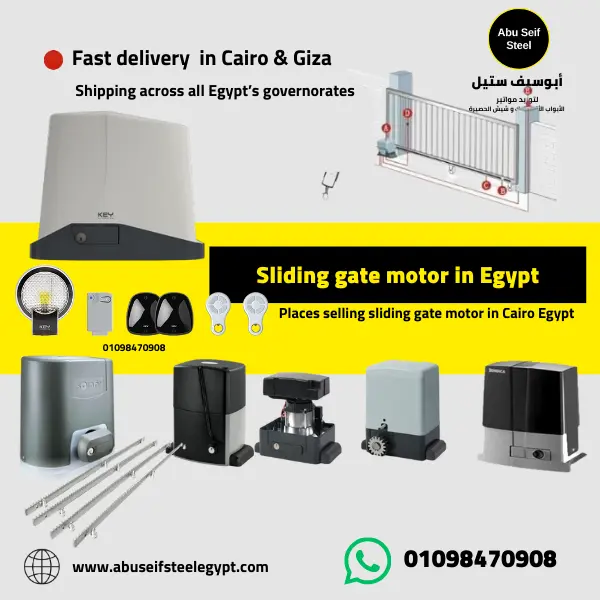
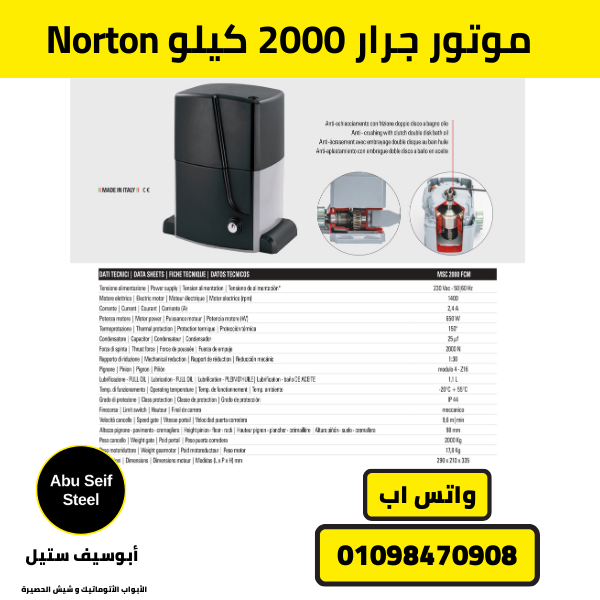
Sliding gate motor driven by a rack and pinion system
Free check
🔧 Find the right sliding gate motor for your gateFive quick questions — capacity is sized at about double the gate weight
1 / 5
1️⃣ Roughly how much does the gate leaf weigh?If unsure, estimate from the gate size and metal thickness
2️⃣ How wide is the gate opening?
3️⃣ How tall is the gate?
4️⃣ Where is the gate used?
5️⃣ How often does the gate open each day?
✅ Recommended: 800 kg sliding gate motor — capacity is sized at roughly double the gate weight.
✅ Recommended: 1000 kg sliding gate motor — capacity is sized at roughly double the gate weight.
✅ Recommended: 1600 kg sliding gate motor — capacity is sized at roughly double the gate weight.
✅ Recommended: 2000 kg sliding gate motor — capacity is sized at roughly double the gate weight.
✅ Recommended: 2500 kg sliding gate motor — capacity is sized at roughly double the gate weight.
✅ Recommended: 4000 kg sliding gate motor — capacity is sized at roughly double the gate weight.
✅ A gate heavier than 2000 kg needs an individual review — send the dimensions and the sales team will confirm.
✅ No problem — send the gate width and metal thickness and the sales team will work the weight out with you.
🏭 Industrial use raises the load: for factories and workshops a class above this recommendation is preferred because of the heavy duty cycle.
Weight is the main input, but width and cycle rate matter too — the sales team confirms before any order.
Sliding gate motor, gate opener, motorised gate: one product, many names
Search results use these terms interchangeably, and they all describe the same equipment. It is worth knowing which is which before comparing offers.
Term you may see
What it refers to
Sliding gate motor / slide gate motor
The operator unit itself — the housing containing the motor and pinion
Sliding gate opener / gate operator
The same unit, named after what it does rather than what it is
Motorised gate / motorized gate
The finished result: a gate that has been fitted with an operator. British and American spellings both appear
Electric sliding gate / automatic sliding gate
Describes the gate once automated, not a separate class of motor
Sliding gate motor kit
The operator supplied together with rack, control board, remote and photocells
One practical consequence. Because a motorised sliding gate is described so many different ways, capacity in kilograms is the only reliable way to compare two offers. A name tells you nothing about whether the unit suits your gate.
How the drive actually moves the gate
Everything in a sliding gate system exists to solve one mechanical problem: turning a spinning motor shaft into straight horizontal travel. The rack and pinion arrangement does this directly. The pinion is a toothed wheel mounted on the operator. The rack is a toothed metal strip that runs along the length of the gate leaf.
When the motor turns the pinion, its teeth engage the rack teeth one after another. Because the rack is fixed to the gate and the operator is fixed to the ground, the pinion effectively walks along the rack and drags the gate with it. Reverse the motor and the gate travels the other way.
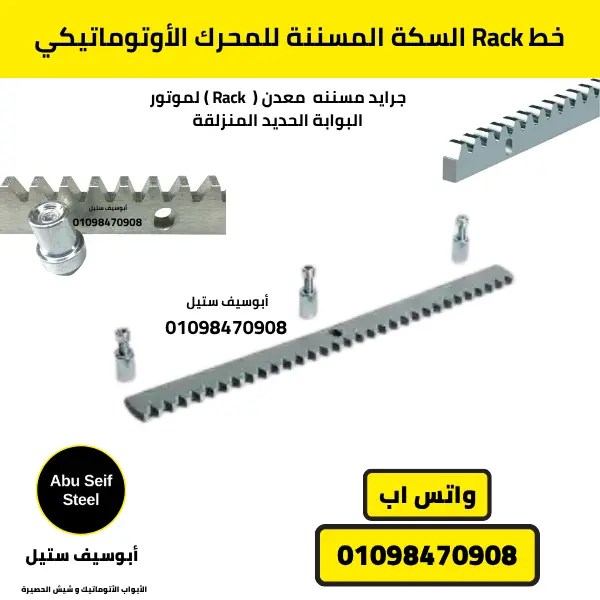
The toothed rack that the pinion travels along
Why the rack matters as much as the motor. The rack is the part that carries the load between motor and gate. Its length has to cover the full travel of the gate, not just the gate leaf, which is why rack quantity is calculated from your gate length rather than sold as a fixed set.
What a complete sliding gate system contains
A working installation is never the motor alone. These are the parts that appear in every sliding gate setup, and what each one is responsible for.
The operator unit
The housing that contains the motor and the pinion. It is fixed on a base beside the gate so the pinion lines up with the rack.
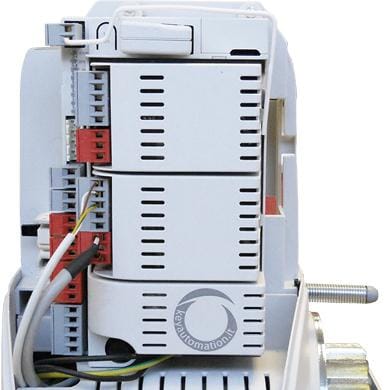
The operator unit, positioned so the pinion meets the rack
The control board
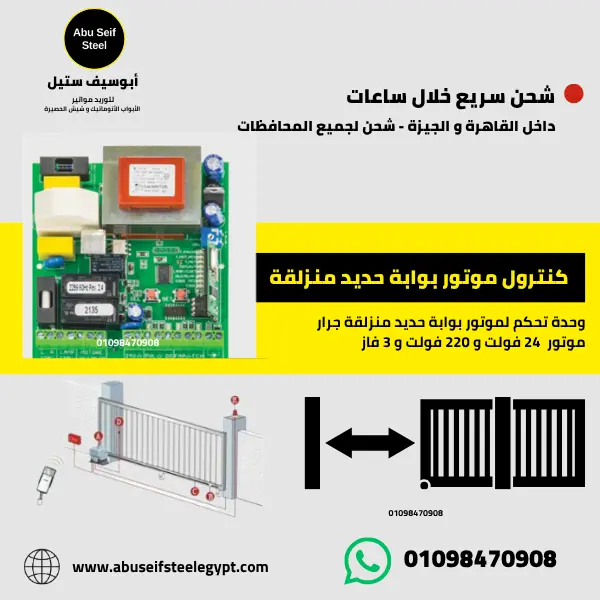
The board is the decision maker. It receives the signal from a remote or a key switch, decides direction, reads the limit inputs that mark the open and closed positions, and reacts to the photocell inputs. Boards are matched to the supply type, which is why a 24 V motor and a 220 V motor do not share the same board.
The control board handles remote, key switch, limits and photocells
Remote control and key switch
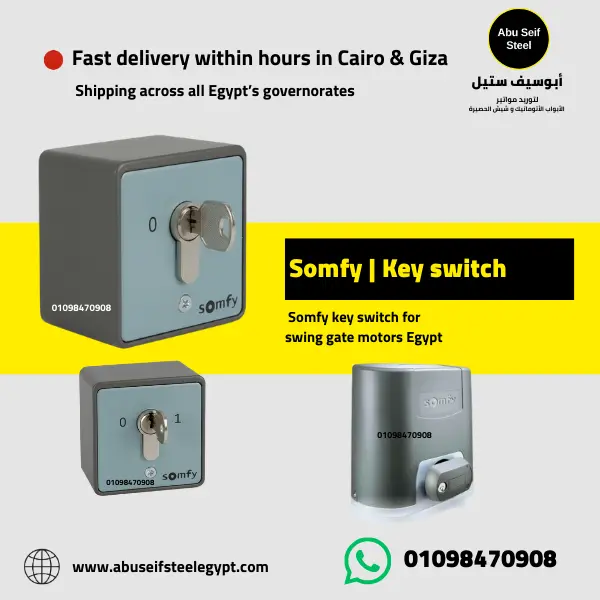
Two ways to trigger the same board. A remote is convenient and portable. A key switch is fixed beside the gate, needs no battery and cannot be misplaced, which is why shared entrances often use both.
A remote transmitter paired to the receiver on the control boardA key switch gives fixed, battery-free operation
Safety photocells
A transmitter and a receiver mounted on either side of the opening. While the gate is moving they hold an infrared beam across the gap. Break the beam and the board stops or reverses the gate. On any opening shared by vehicles and people, this is the part that prevents contact.
Photocells hold a beam across the opening while the gate moves
Manual release
Every operator includes a release that is unlocked with a key. Turning it disengages the drive so the gate can be pushed by hand. This is what keeps the gate usable during a power cut.
Capacity is quoted in kilograms and refers to the weight of the gate leaf the operator is built to move. Heavier gates need more torque to start moving and more braking control to stop cleanly, which is what separates the classes below.
Capacity
Typical use
800 kg
Lighter villa and residential gates
1000 kg
Medium residential gates
1100 kg (24 V)
Medium gates where quieter operation is wanted
1600 kg
Medium to heavy gates
2000 kg
Heavy gates, compounds and facilities
2500 kg
Large gates and larger installations
4000 kg
The heaviest industrial gates
Weight is not the only input. Gate width and how many times the gate opens per day both matter. A gate that cycles dozens of times daily puts a different demand on the operator than one that opens twice.
Heavier classes are built for larger gates and frequent cycling
Supply options: 220 V, 24 V and three-phase
A 220 V operator takes mains power directly. A 24 V operator runs on low-voltage direct current supplied by its control board, which is itself connected to the mains; the practical difference is quieter running and finer control over how the gate accelerates and slows at each end. Three-phase units are used where a three-phase supply is already available on site.
Four details settle almost every sliding gate opener order. Having them ready turns a long back-and-forth into a single exchange.
Capacity — sized at roughly double the gate leaf weight. If the weight is unknown, the width, height and metal thickness are enough to work it out.
What ships with it — whether the quote covers the toothed rack, the remote or key switch, and the photocells, or lists them separately.
Gate travel — how far the gate moves to stand fully open. Rack quantity comes from this figure, not from the width of the leaf.
Destination and power — your governorate for delivery, and whether the site has 220 V or three-phase.
On price. There is no single figure for a sliding gate motor: it moves with the capacity class and with which parts are included. Send the four details above on WhatsApp and the current price for your exact configuration comes back in one message.
Supply only. We supply and ship the equipment. Arranging the work at your gate is on your side — worth knowing before comparing offers.
Frequently asked questions
What is a sliding gate motor?A sliding gate motor is an electric operator that moves a gate horizontally along a track. A pinion gear on the motor engages a toothed rack fixed along the gate leaf, converting rotation into linear travel so the gate slides open and closed.
How does the rack and pinion system work?The motor turns a toothed pinion. That pinion meshes with a toothed rack running along the gate. As the pinion rotates it walks along the rack, pulling the gate with it. Reversing the motor reverses the direction of travel.
What happens during a power cut?Sliding gate operators include a manual release that is unlocked with a key. Releasing the drive disengages the motor from the gate so it can be moved by hand until power returns.
What stops the gate if something is in the way?Photocells. A transmitter and receiver face each other across the opening. If the infrared beam is broken while the gate is moving, the control board stops the gate or reverses it.
Which capacities are available?Our range covers 800, 1000, 1100 (24 V), 1600, 2000, 2500 and 4000 kg. The correct one depends on the actual gate weight, its width and how often it opens each day.
Do these motors run on Egyptian mains?Yes. Units are available in 220 V, 24 V and three-phase. A 24 V motor is powered through its control board, which itself connects to the mains supply.
Is a motorised gate the same as a sliding gate motor?They describe the same setup from two sides. The sliding gate motor is the operator unit you buy; a motorised gate is the gate once that operator is fitted to it. Sliding gate opener and gate operator are further names for the same unit, and both the British spelling motorised and the American motorized are in common use.
How much does a sliding gate motor cost in Egypt?There is no single figure, because the price follows the capacity class and which parts are included — rack quantity alone changes with the travel of your gate. Send the gate weight or dimensions, the travel, the power supply and your governorate on WhatsApp 01098470908 and the current price for that exact configuration comes back in one reply.
Can I order the rack or the control board on its own?Yes. Operators, toothed rack, control boards, remotes, key switches and photocells are all supplied separately, provided the part matches the system you already have. For a control board the motor model has to be known first, because boards follow the supply type of the motor.
Supply and delivery. We supply the equipment only. Cairo and Giza are delivered same day, other governorates in 3 to 5 working days. Payment is cash on delivery, bank transfer or InstaPay.