Sliding Gate Motor Power Supply — 220 V, 24 V and Three-Phase Compared
Sliding gate operators come in three supply types: 220 V takes mains power directly, 24 V runs on low-voltage direct current fed by its own control board, and three-phase is used where that supply already exists on site. The gate moves identically in all three; what differs is noise, how finely the movement is controlled, and which control board the unit needs.
220 VMains power, direct
24 VLow voltage via control board
Three-phaseWhere the site already has it
UnchangedCapacity still 2x gate weight
The supply type changes how the motor is powered, not how the gate moves
220 V — mains power, straight to the operator
This is the common arrangement. The operator connects to the ordinary 220 V supply that already reaches the property, and its control board switches that supply to drive the motor in one direction or the other.
It is the direct option: fewer parts between the mains and the motor, and a familiar setup for anyone working on the gate later. Most of the capacity range is built this way.
What it suits. Gates where straightforward operation is the priority and the extra refinement of low-voltage control is not needed.
24 V — low voltage, finer control
A 24 V operator does not take mains power itself. Its control board connects to the 220 V supply and delivers low-voltage direct current to the motor. That extra stage is exactly what makes the difference in behaviour.
Because the board governs a low-voltage motor, it can ramp the gate up and slow it down more gradually at each end of the travel rather than starting and stopping abruptly. The practical result is quieter running and a gentler arrival at the open and closed positions.
On a 24 V system the control board is what feeds the motor, not just what switches it
What it suits. Homes, villas and compounds — anywhere the gate sits close to windows or to people, and where a quieter, smoother cycle is worth having. In our range the 24 V model is the 1100 kg unit.
Three-phase is not an upgrade you choose for a gate; it is a match to what the site already has. Factories, workshops and larger facilities are usually wired for it because their other equipment needs it, and in that case the gate operator can be specified to suit.
What it suits. Industrial sites with an existing three-phase supply. On a normal residential connection this option does not apply.
Side by side
220 V
24 V
Three-phase
Power to the motor
Mains, direct
Low-voltage DC from the board
Mains, direct
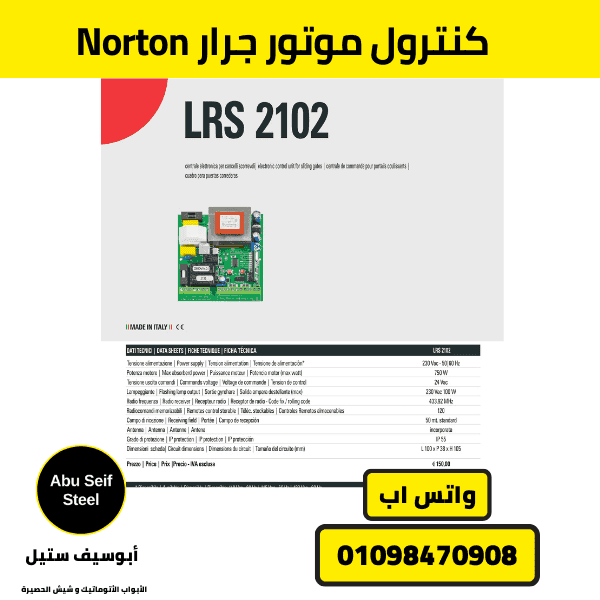
Control board
Matched to 220 V
Matched to 24 V, supplies the motor
Matched to three-phase
Running noise
Standard
Quieter
Standard
Start and stop
Standard
More gradual at each end
Standard
Typical setting
General use
Homes and compounds
Sites already wired for it
The control board is not interchangeable. A 24 V motor needs its own 24 V board and a 220 V motor needs a 220 V one. This is the single most common point of confusion when someone orders a replacement board on its own.
Capacity and supply type are two separate decisions
It is worth being clear about the boundary. Choosing 24 V does not let you use a smaller operator on a heavy gate, and choosing 220 V does not mean giving up on safety devices.
Capacity — still sized at roughly double the gate weight, on every supply type.
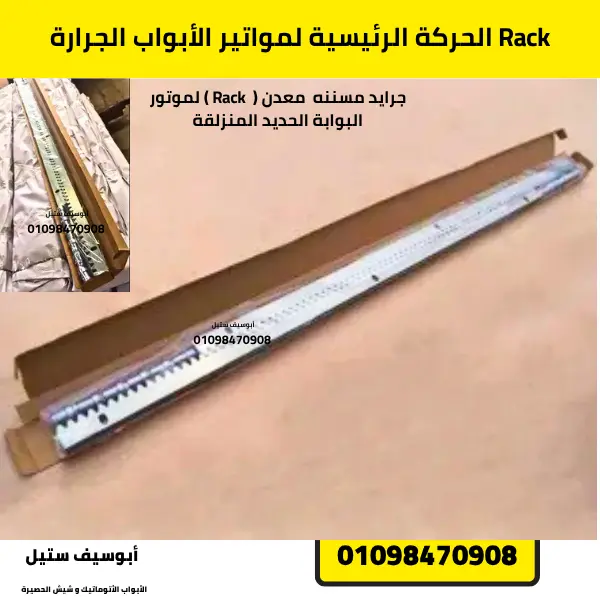
The rack — the toothed rack and the way the gate is driven are identical.
Photocells and remotes — available with all three; the board provides the inputs.
Manual release — every operator has one, so the gate can be moved by hand during a power cut regardless of supply.
The drive mechanism is the same whichever supply the motor uses
Frequently asked questions
What is the difference between a 220 V and a 24 V sliding gate motor?A 220 V operator takes mains power directly. A 24 V operator runs on low-voltage direct current supplied by its own control board, which is the part connected to the mains. The gate moves the same way in both cases; what changes is how the power reaches the motor and how finely the movement can be controlled.
Is 24 V better than 220 V?Neither is better in general. A 24 V system runs more quietly and controls acceleration and braking more finely, which suits homes and compounds. A 220 V system is the straightforward choice where those refinements are not the priority. The gate weight still decides the capacity class either way.
When is three-phase used?Only where a three-phase supply already exists on site, which in practice means factories, workshops and larger facilities. It is not something added to a residential property for a gate.
Can I put a 24 V motor on a 220 V control board?No. The control board is matched to the supply type of the motor. A 24 V unit ships with its own board, and the two are not interchangeable.
Which supply types do you stock?Operators are available in 220 V, 24 V and three-phase. In the 24 V range the stocked model is the 1100 kg unit.
Does the supply type change how I choose the capacity?No. Capacity is still sized at roughly double the gate weight regardless of supply. The supply type is a separate decision about how the gate behaves while moving.
Supply and delivery. We supply the equipment only. Cairo and Giza are delivered same day, other governorates in 3 to 5 working days. Payment is cash on delivery, bank transfer or InstaPay.